



Electric Car Charger Installation

Install Reliable Electric Car Chargers in Ashland, MA
Electric car charger installation requires careful planning, precise electrical work, and strict adherence to Massachusetts building codes. The process begins with a thorough assessment of your home’s electrical panel, determining whether your current system can support the additional load or if an upgrade is necessary.
Many homes built before 2010 in Ashland require panel modifications to accommodate Level 2 charging stations, which draw 30 to 50 amps during operation. Our licensed electricians evaluate your existing infrastructure, recommend the optimal charger location based on your parking configuration, and calculate the exact circuit requirements for your specific vehicle model.
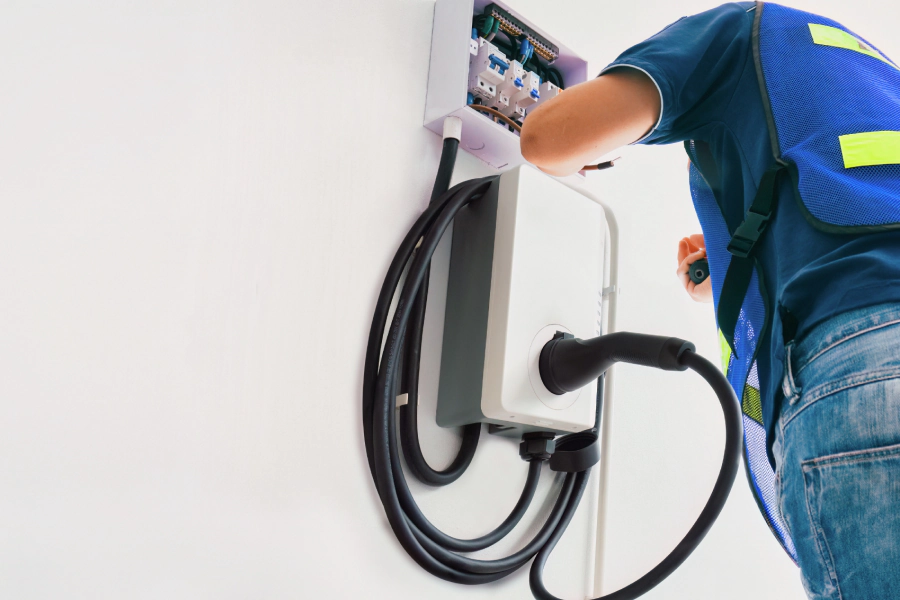
Professional electric car charger installation includes running dedicated wiring from your panel to the charging location, installing appropriate circuit breakers, mounting the charging unit securely, and completing all necessary permitting and inspection processes. The work must comply with National Electrical Code standards and local regulations to protect your home and maintain your vehicle’s warranty coverage.
Winter charging demands in Massachusetts increase significantly as cold temperatures reduce battery efficiency, making properly sized circuits essential for consistent performance. We install chargers that accommodate future needs, whether you plan to add a second electric vehicle or upgrade to a model with faster charging capabilities.
The installation also considers weatherproofing requirements for outdoor units, cable management solutions, and integration with existing garage electrical systems. Quality electric car charger installation protects your investment by preventing electrical overloads, reducing fire risks, and ensuring your charging equipment operates at peak efficiency.
Our team coordinates with utility companies when necessary, handles all documentation, and provides clear guidance on operating your new charging station. The result is a reliable charging solution that adds convenience to your daily routine while supporting Massachusetts’ clean energy goals.
Understanding Your Installation Options
- Complete electrical panel assessment to determine current capacity and whether upgrades are necessary for safe operation
- Installation of dedicated 240-volt circuits sized appropriately for your charger model, typically 40 or 50 amps for Level 2 stations
- Proper mounting of charging units in garages or outdoor locations with weatherproof enclosures rated for New England climate conditions
- Coordination with Ashland building department for required electrical permits and scheduling inspections to ensure code compliance
- Cable management solutions that keep charging cords organized and protected from vehicle traffic in driveways and garage spaces
- Integration with existing home electrical systems, including GFCI protection and proper grounding to prevent electrical hazards
- Post-installation testing and demonstration of charger operation, including guidance on optimal charging schedules to minimize electricity costs
What Our Installation Service Includes
Selecting the right equipment and understanding the installation process are crucial steps toward successful electric car charger installation. Massachusetts homeowners benefit from knowing their options before committing to a specific solution. Charger models vary significantly in charging speed, smart features, and compatibility with different vehicle makes. Some units offer WiFi connectivity for monitoring energy usage, scheduling charging during off-peak hours, and tracking costs through mobile apps. Others provide basic functionality at lower price points while still delivering reliable overnight charging.
The installation timeline typically spans two to four days in Ashland, accounting for permit approval, scheduled utility coordination if panel upgrades are needed, and final electrical inspection. Understanding these factors allows you to plan accordingly and make informed decisions that align with your budget, charging needs, and home’s electrical capacity. Professional guidance ensures you select equipment that will serve you reliably for years.
Get In Touch
If you need professional electrical services in Ashland, MA, our experts can help! Contact us today at (508) 739-3629 to learn more and get a free estimate.